How Accurate Are Bathroom Scales?
Recommended picks


What the accuracy number actually means
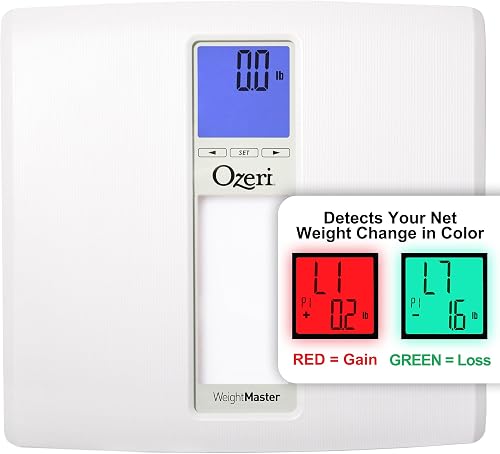
When a listing states an accuracy like 0.2 pounds, it is describing resolution, meaning the smallest increment the display can move. The Etekcity EB4074C lists 0.2 pounds and a 400 pound capacity, while the Greater Goods 0394 lists 0.1 kilograms, and the Ozeri ZB20-W lists 0.1 pounds. A smaller number sounds more precise, but it does not guarantee that repeated weigh ins will land on the same value. Precision, how closely repeated readings agree, is separate from accuracy, how close a reading is to your true weight. For tracking changes at home, a consistent reading day to day is usually more useful than chasing the finest possible increment.
Why two weigh ins can disagree
Step on twice in a row and you may see slightly different numbers, which is normal rather than a defect. Body weight swings through the day with food, drink, and other natural changes, often by a pound or more. Where you place your feet, whether you hold still, and even how the scale settles can nudge the display. To compare fairly, weigh yourself at the same time of day under similar conditions, such as first thing in the morning. The aim is a steady routine, not a single perfect reading.
Flooring and placement matter more than you think
A scale is only as steady as the surface under it. Hard, level flooring like tile or sealed concrete gives the load sensors an even base, so readings tend to repeat well. Carpet, rugs, or an uneven board can let the scale flex or tilt, which throws numbers off in ways that look like the device is faulty. Pick one flat spot and use it every time so your readings stay comparable. Many digital models, including the Etekcity EB4074C and the Ozeri ZB20-W, use a step on design that wakes the scale when you stand, so settling fully before reading helps.
Calibration, batteries, and simple upkeep
Most home digital scales calibrate themselves at startup, which is why letting the scale sit a moment before you step on can help. Follow the maker's instructions for any reset or zeroing step rather than guessing. Weak batteries are a common and easy to miss cause of drifting numbers, so swap them when readings start wandering. Keep the platform clean and dry, since grit or moisture under the feet can affect contact. A quick sanity check is to weigh a known object, like a fixed dumbbell, and confirm the number stays the same across tries.
Body composition readings are estimates
Scales that list body fat, muscle, or similar metrics usually use bioelectrical impedance, a small electrical signal that passes through the body to estimate composition. These figures are estimates, and they can shift with hydration, recent meals, and skin contact, so they are best read as trends rather than exact measurements. Weight itself is generally the most repeatable number such a scale reports. If a composition reading or any health number concerns you, a healthcare professional can interpret it properly. HealthQuay is informational only and does not provide medical advice.
How to choose for steady readings
For dependable home tracking, look for a clearly stated accuracy figure, a capacity comfortably above your weight, and a stable platform. The Etekcity EB4074C pairs a 0.2 pound resolution with a 400 pound capacity and a tempered glass platform, and it carries a 4.7 rating across about 347,300 reviews. The budget friendly Ozeri ZB20-W lists 0.1 pound resolution and a 440 pound capacity at a 4.0 rating across about 647 reviews. The Greater Goods 0394 lists 0.1 kilogram resolution, a 400 pound capacity, and a 4.7 rating across about 15,700 reviews. Any of these supports a steady weigh in habit when used on level flooring.
Common mistakes to avoid
- Weighing on carpet or an uneven surface instead of a flat, hard floor, which makes readings drift.
- Comparing weigh ins taken at different times of day, after meals or workouts, then assuming the scale is wrong.
- Treating the listed accuracy number, such as 0.1 pounds, as a promise that repeated readings will match exactly.
- Ignoring a fading battery, which is a frequent and easily fixed cause of wandering numbers.
- Reading the display before the scale has fully settled, especially on step on models.
- Taking body composition estimates as exact figures rather than trends that shift with hydration.
Frequently asked questions
Are cheaper bathroom scales less accurate?
Not necessarily. Price often reflects materials, display, and extra features more than core weighing precision. Several well rated budget models, like the Etekcity EB4074C at about $16.88, list the same 0.2 pound resolution as pricier scales. Stable placement and a consistent routine usually affect your readings more than price.
How often should I weigh myself for reliable tracking?
There is no single rule, but weighing at the same time of day under similar conditions makes your numbers comparable. Many people pick one moment, such as first thing in the morning, and stick with it. Watching the trend over days or weeks is more telling than any single reading. For guidance tied to your health, speak with a healthcare professional.
Why does my weight change so much during the day?
Body weight naturally swings with food, drink, and other ordinary changes, often by a pound or more between morning and evening. That is why two readings hours apart can differ even on a precise scale. Comparing weigh ins taken at the same time each day reduces this noise.
Can I make an old scale more accurate again?
Often yes, with simple upkeep. Replace weak batteries, set the scale on level hard flooring, keep the platform clean and dry, and follow any reset step in the manual. Confirm steadiness by weighing a fixed object a few times and checking that the number holds.